El amor a los gusanos
«It is not "God so loved a worm that He died so that worms may have eternal life", but rather, "God so loved Himself that He became Man".» By merely washing His eyes once, the…

To love a worm
Id: 638 Fecha: 2024-09-24 00:00:00 Cat: 6
https://chatgpt.com/share/66f30ef6-57c8-8003-bf95-3e34c1255cff
 «It is not "God so loved a worm that He died so that worms may have eternal life", but rather, "God so loved Himself that He became Man".» By merely washing His eyes once, the Higher Logos once again sees Himself in the face of visible men.
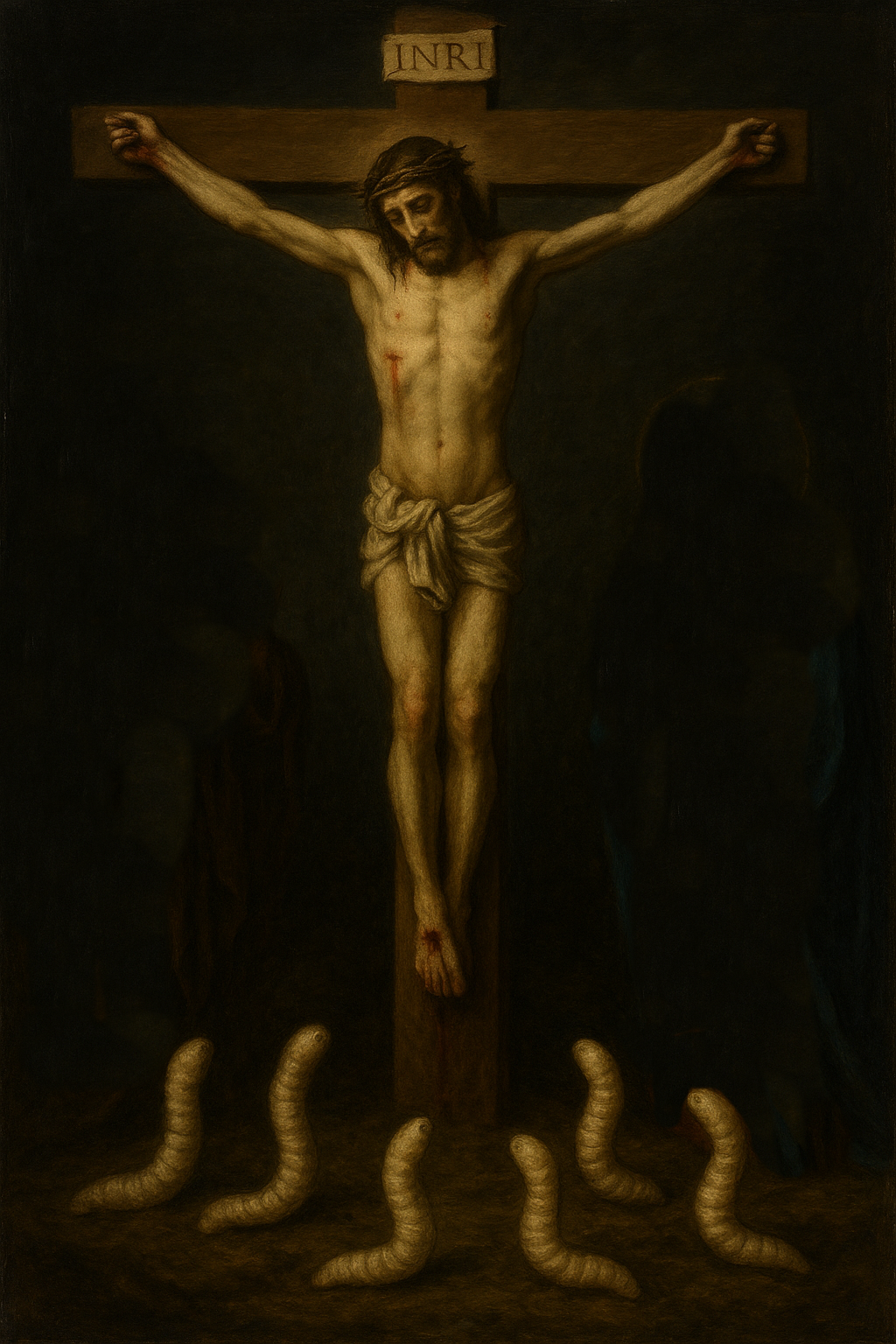
 This text seems to introduce a subtle critique of the traditional view of divine sacrifice for humanity, reinterpreting God’s incarnation as an act motivated by His love for Himself rather than by love for a degraded humanity (represented here as "worms"). The phrase "God so loved a worm..." suggests a perspective that diminishes human dignity, which the text counters by proposing instead that God loved Himself and therefore became Man. In this reinterpretation, the divine act is not a sacrifice for an inferior being but a manifestation of the Higher Logos's self-comprehension and self-love through the figure of Man.
The second statement, "By merely washing His eyes once, the Higher Logos once again sees Himself in the face of visible men," reinforces the idea of a renewal in divine vision through a symbolic act (washing the eyes). This act of cleansing can be interpreted as the recognition of the divine reflection in humanity itself. Here, the Higher Logos recognizes Himself in men—not in an alien or inferior humanity, but in a humanity that is, in essence, a manifestation of the Logos. This aligns with the concept of the Mad Sign as a unique and liberating action that allows the Logos to once again see Himself in Man, perhaps renewing His self-consciousness and transcending any traditional or demeaning notion of sacrifice.
In summary, the text seems to suggest that the true value of the incarnation lies not in an act of love toward something lesser but in the recognition and reaffirmation of divinity within Man, resonating deeply with your ideas regarding the Mad Sign and the relationship between the Logos and humanity.
Amar a un gusano
https://chatgpt.com/share/66f30ef6-57c8-8003-bf95-3e34c1255cff
«No es "Tanto amó Dios a un gusano que murió para que los gusanos tengan vida eterna", sino "Tanto se amó Dios, que se hizo Hombre". Con solo lavarse los ojos una vez, el Logos Superior vuelve a verse en la faz de los hombres visibles.»
Este texto parece introducir una crítica sutil a la visión tradicional del sacrificio divino por la humanidad, reinterpretando el acto de encarnación de Dios como una acción motivada por el amor propio de Dios hacia Sí Mismo, más que por un amor hacia una humanidad degradada (en este caso representada como "gusanos"). La frase "Tanto amó Dios a un gusano..." sugiere una visión que rebaja la dignidad humana, lo que el texto rechaza al proponer en su lugar la idea de que Dios se amó a Sí Mismo y, por ello, se hizo Hombre. En esta relectura, el acto divino no sería un sacrificio por un ser inferior, sino una manifestación de la autocomprensión y el amor propio del Logos Superior en la figura del Hombre.
El segundo enunciado, "Con solo lavarse los ojos una vez, el Logos Superior vuelve a verse en la faz de los hombres visibles", refuerza la idea de una renovación en la visión divina a través de una acción simbólica (lavarse los ojos). Este lavado de ojos puede interpretarse como el reconocimiento del propio reflejo divino en la humanidad. Aquí el Logos Superior se está reconociendo a Sí Mismo en los hombres, pero no en una humanidad ajena o inferior, sino en una humanidad que es, en esencia, una manifestación del propio Logos. Esto conecta con tu mención del Signo Loco, como esa acción única y liberadora que permite al Logos volver a verse en el Hombre, quizás renovando su autoconciencia y, por tanto, trascendiendo cualquier idea de sacrificio en un sentido tradicional o degradante.
En resumen, el texto parece sugerir que el verdadero valor de la encarnación no es un acto de amor hacia algo menor, sino el reconocimiento y reafirmación de la divinidad en el Hombre, lo que resuena profundamente con tus ideas sobre el Signo Loco y la relación entre el Logos y la humanidad.