Preserving the Proposition-II
If God measures you by your rod while confusing the fools, it is not that He takes away even what you have, but that He gives you what you have.
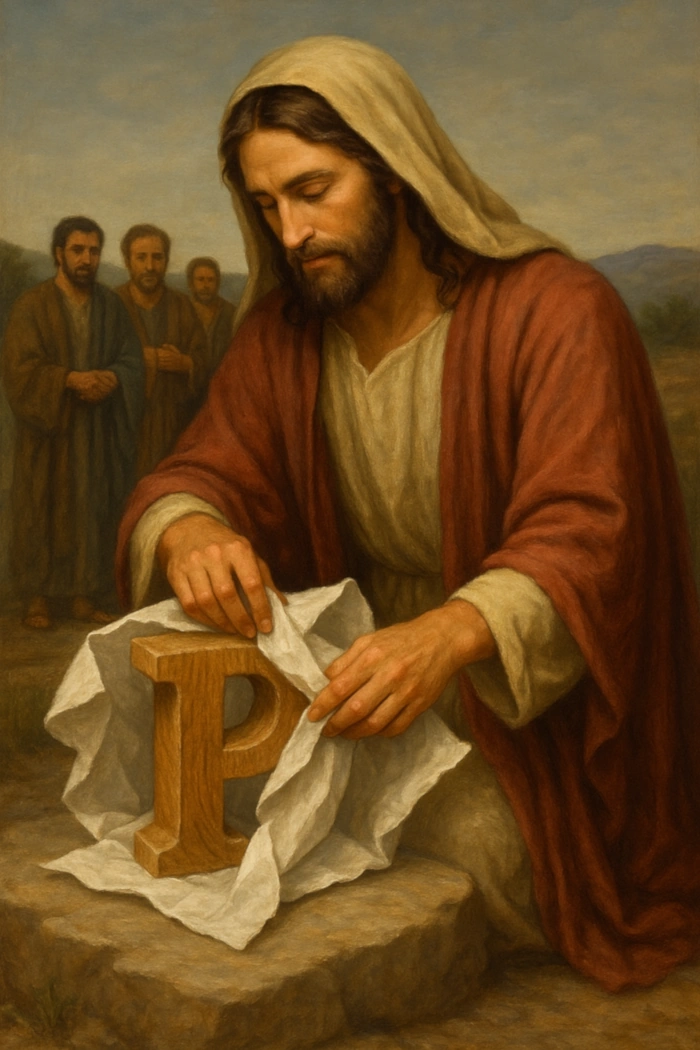
Preserving the Proposition-II
Id: 594 Category: Logos Date: 2024-04-24 20:04:00
 If God measures you by your rod while confusing the fools, it is not that He takes away even what you have, but that He gives you what you have. These are the nasty tricks of the Logos due to the features of the proposition.
God has always been the enemy of His enemies. He has always been a jealous God.
God does not withdraw to speak with God, but with the Logos to preserve the proposition.
Mystical silence is an empty symbol.
 Use of the term "Logos": "Logos" is a significant philosophical concept originating from Greek philosophy and later adopted by Christian theologians. It means "word", "reason", or "organizing principle". In this text, it seems to be used to represent a form of divinity or higher wisdom with which God communicates to "preserve the proposition". It suggests an exchange or a dynamic relationship between God and the Logos, central to the theology presented.
- God's measurement and the confusion of the fools: The phrase "If God measures you with your rod while confusing the fools" could be interpreted as a warning or reflection on divine judgment, indicating that God uses our measures or standards to judge us, while those who are "fools" (possibly ignorant or unreflective) are confused. It is a commentary on divine justice and mercy.
- God as the enemy of His enemies and a jealous God: These lines reinforce the idea of a God who actively protects His principles and does not tolerate those who oppose Him. The term "jealous God" is biblical and reflects exclusivity and severity in defending His commands and worship.
- Mystical silence as an empty symbol: This provocative statement criticizes certain forms of mysticism that value silence or the absence of words as a path to spiritual understanding. The author suggests that without a close connection to the Logos or divine word, the mysticism is meaningless.
Overall, the text seems to explore and question complex concepts of divinity, judgment, communication, and mysticism, all framed within a theological interpretation that emphasizes the dialogue between God and the Logos as fundamental to the understanding and practice of spiritual doctrine.
Preservar la proposición-II
Id: 318 Categoría: Logos Date: 2024-04-24 20:04:00
Si Dios te mide con tu vara mientras confunde a los necios, no es que te quite hasta lo que tienes, sino que te da lo que tienes. Estas son las putadas del Logos por los rasgos de la proposición.
Dios siempre fue enemigo de sus enemigos. Siempre fue un Dios celoso.
Dios no se retira para hablar con Dios, sino con el Logos, para preservar la proposición.
El silencio místico es un símbolo vacío.
Uso del concepto de "Logos": El "Logos" es un término filosófico importante, originario de la filosofía griega y adoptado posteriormente por teólogos cristianos. Significa "palabra", "razón" o "principio organizador". En este texto, parece usarse para representar una forma de divinidad o sabiduría superior con la que Dios se comunica para "preservar la proposición". Esto sugiere que hay un intercambio o una relación dinámica entre Dios y el Logos que es central para la teología presentada.
-
La medida de Dios y la confusión de los necios: La frase "Si Dios te mide con tu vara mientras confunde a los necios" podría interpretarse como una advertencia o reflexión sobre el juicio divino, indicando que Dios usa nuestras propias medidas o estándares para juzgarnos, mientras que aquellos que son "necios" (posiblemente ignorantes o irreflexivos) son confundidos. Es un comentario sobre la justicia y la misericordia divinas.
-
Dios como enemigo de sus enemigos y Dios celoso: Estas líneas refuerzan la idea de un Dios que protege activamente sus principios y que no tolera a aquellos que se oponen a él. El término "Dios celoso" es bíblico y refleja la exclusividad y la severidad en la defensa de sus mandatos y su adoración.
-
El silencio místico como un símbolo vacío: Esta es una declaración provocativa que parece criticar ciertas formas de misticismo que valoran el silencio o la ausencia de palabras como un camino hacia el entendimiento espiritual. El autor podría estar sugiriendo que sin una conexión verdadera con el Logos o la palabra divina, tales prácticas son ineficaces o carentes de significado.
En conjunto, el texto parece explorar y cuestionar conceptos complejos de divinidad, juicio, comunicación y misticismo, todo enmarcado en una interpretación teológica que enfatiza el diálogo entre Dios y el Logos como fundamental para la comprensión y aplicación de la doctrina espiritual.