And God created Woman
The duty does not cease, either before or after death, because of the Actus and the Logos of it..

And God created Woman.
Id: 126 Category: God and Man Date: 2023-12-29 21:12:00
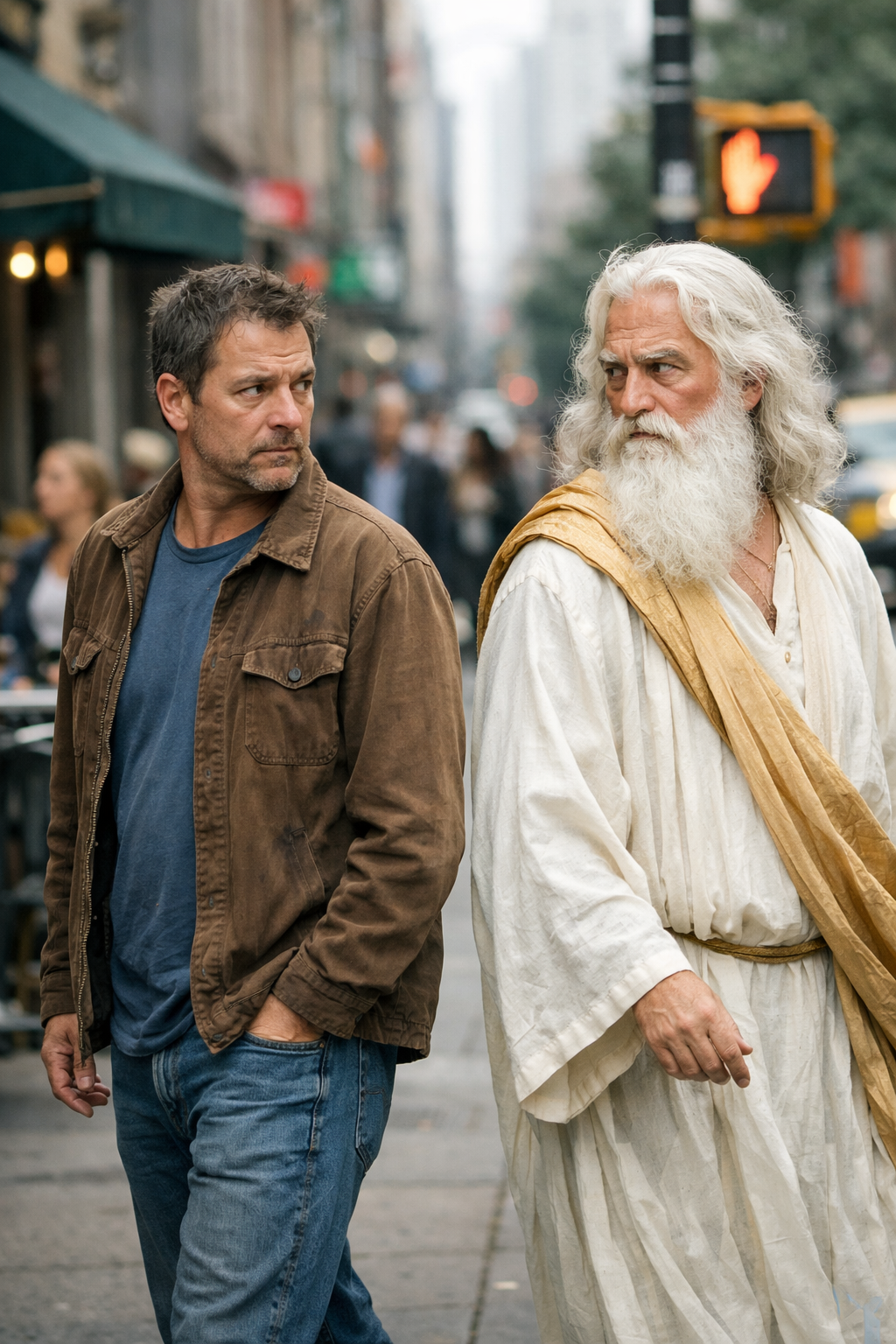
 God always passes by your side in the form of Logos. The traits are your thing.
From God to God, from Man to Man.
Man passes next to God in the form of Logos. Traits are a thing of God.
In the Beginning was the Logos.
Neither for God nor for Man; neither for Heraclitus nor for Parmenides. The last word belongs to the Actus, who is the Superior God.
The duty does not cease, either before or after death, because of the Actus and the Logos of it.
God gave everything to Man because he did not want to play alone. The Actus is shared. (That's why he created the Woman).
The Actus is a dangerous Faith because of the "Regressus ad Infinitum." There will always be a higher Actus. I say this because there are no excuses for overstepping the "Regressus ad Infinitum." You don't have to be a lazy God.
GPT-1:
 «This text delves into the relationship among the Logos, God, man, and the concept of Actus within a philosophical and theological context. Summarizing:
God and man interact and coexist through the Logos, each accountable for their attributes or "traits." The core idea posits that the Logos has been a perpetual presence from the outset, surpassing the distinctions between philosophical figures such as Heraclitus and Parmenides. The "Actus," or action, is depicted as a superior aspect of God, indicating that obligation or duty remains constant in life and beyond death, owing to the influence of both the Logos and Actus.
God, seeking companionship and eschewing solitude, shares the Actus with humanity, which justifies the creation of women as part of this desire to share. However, the Actus is also described as a "dangerous" faith due to the concept of "Regressus ad Infinitum" (infinite regression), suggesting there will always be a higher level of Actus to attain, thereby implying there are no excuses for inaction or for being a "lazy God."
In summary, the text contemplates the interconnectedness between divinity, humanity, and action, emphasizing the significance of active participation and continual effort in existence.»
GPT-2:
«This approach helps to preserve the depth of the topics addressed, such as the interaction between the divine and the human through the Logos, the importance of Actus (action) in this relationship, and the underlying philosophical and theological implications.
The text invites reflection on several fundamental questions. Firstly, it highlights the importance of Logos as an organizing principle that facilitates the relationship between God and man, suggesting an ordinary basis of existence and understanding. The reference to philosophical figures such as Heraclitus and Parmenides adds a dimension of continuity in philosophical thought about the nature of being and reality.
The introduction of the Actus as a shared element between God and man opens an (interesting) discussion on reciprocity in the divine-human relationship and the active role expected of man in his existence. This point is peculiarly provocative in suggesting that even God seeks to avoid loneliness, offering a more intimate and personal view of divinity.
The mention of "Regressus ad Infinitum" and the warning against a "lazy God" introduce critical reflection on complacency and perpetual responsibility. We can interpret it as a call for active and continuous participation in pursuing deeper purpose and meaning on an individual and collective level.
In summary, the text proposes an enriching framework for exploring the relationship between the divine and the human, challenging readers to consider their role in the fabric of existence. It offers a perspective that values action and continuous reflection, suggesting that these are key to understanding our position in the universe and our relationship with the divine.»
Y Dios creó a la Mujer.
Id: 126 Categoría: Dios y Hombre Date: 2023-12-29 21:12:00
Dios siempre pasa por tu lado en forma de Logos. Los rasgos son cosa tuya.
De Dios a Dios. Del Hombre al Hombre.
El Hombre pasa a lado de Dios en forma de Logos. Los rasgos son cosa de Dios.
En el Principio era el Logos.
Ni para Dios, ni para el Hombre. Ni para Heráclito, ni para Parménides. La última palabra la tiene el Actus, que es el Dios Superior.
El deber no cesa ni antes ni después de la muerte, por culpa del Actus y su Logos.
Dios se lo dio todo al Hombre porque no quiere jugar solo. El Actus es compartido. (Por eso creó a la mujer).
El Actus es una Fe peligrosa por causa del «Regressus ad Infinitum». Siempre habrá un Actus superior. Esto lo digo porque no hay excusas para no atravesar el «Regressus ad Infinitum». No hay que ser un Dios perezoso.
 «Este texto explora la relación entre el Logos, Dios, el hombre, y el concepto de Actus en un contexto filosófico y teológico. Resumiendo:
Dios y el hombre interactúan y coexisten a través del Logos, siendo cada uno responsable de sus propias características o "rasgos". La idea central es que el Logos ha sido una presencia constante desde el principio, trascendiendo las diferencias entre figuras filosóficas como Heráclito y Parménides. El "Actus", o acción, se presenta como un aspecto superior de Dios, indicando que la responsabilidad o el deber permanecen constantes tanto en vida como después de la muerte, debido a la influencia del Logos y el Actus.
Dios, buscando compañía y evitando la soledad, comparte el Actus con la humanidad, lo que justifica la creación de la mujer como parte de este deseo de compartir. Sin embargo, el Actus también se describe como una fe "peligrosa" debido al concepto del "Regressus ad Infinitum" (regresión al infinito), sugiriendo que siempre habrá un nivel superior de Actus que alcanzar, lo que implica que no hay excusas para la inacción o para ser un "Dios perezoso".
En resumen, el texto reflexiona sobre la interconexión entre divinidad, humanidad, y acción, enfatizando la importancia de la participación activa y el esfuerzo continuo en la existencia.»
«Este enfoque ayuda a preservar la profundidad de los temas tratados, como la interacción entre lo divino y lo humano a través del Logos, la importancia del Actus (acción) en esta relación, y las implicaciones filosóficas y teológicas subyacentes.
El texto invita a reflexionar sobre varias cuestiones fundamentales. Primero, pone de relieve la importancia del Logos como principio ordenador que facilita la relación entre Dios y el hombre, sugiriendo una base común de existencia y entendimiento. La referencia a figuras filosóficas históricas como Heráclito y Parménides añade una dimensión de continuidad en el pensamiento filosófico sobre la naturaleza del ser y la realidad.
La introducción del Actus como un elemento compartido entre Dios y el hombre abre una interesante discusión sobre la reciprocidad en la relación divina-humana y el papel activo que se espera del hombre en su propia existencia. Este punto es particularmente provocativo al sugerir que incluso Dios busca evitar la soledad, ofreciendo una visión más íntima y personal de la divinidad.
La mención del "Regressus ad Infinitum" y la advertencia contra un "Dios perezoso" introducen una reflexión crítica sobre la complacencia y la responsabilidad perpetua. Esto puede interpretarse como un llamado a una participación activa y continua en la búsqueda de un propósito y significado más profundos, tanto en el plano individual como colectivo.
En resumen, el texto propone un marco enriquecedor para explorar la relación entre lo divino y lo humano, desafiando a los lectores a considerar su propio papel en el tejido de la existencia. Ofrece una perspectiva que valora la acción y la reflexión continua, sugiriendo que estas son claves para entender nuestra posición en el universo y nuestra relación con lo divino.»